Search This Blog

Wednesday, November 16, 2011

In Sports, Enough is NEVER Enough...


There is no room for second place. There is only one place in my game and that is first place. I have finished second twice in my time at Green Bay and I never want to finish second again. Vince Lombardi


As a boy growing up with parents who were strict disciplinarians, I can remember one of my father’s favorite phrases… “Steven, Enough is Enough!”  He usually stated this demand when his patience had been tested, and he was at his boiling point.  The next wrong move, would get me a swift slap from a man who stood about six foot two, with hands the size of frying pans.  (Back then it was called TOUGH LOVE!) 

I have come to realize that my dad’s phrase, while still applicable in the new millennium, doesn’t really apply to two areas – Business and Sports.  I am quite certain...strike that,    I’m positive, that in those two industries, my dad’s calling card statement does not apply – in fact, I’ll go one step further, those two industries live by a different code, and that code is… “ENOUGH Is NEVER ENOUGH!

How many times in business, have you developed a great idea that solved a lingering problem, or hit your monthly sales quota, or closed a monster deal, and after a few slaps on the back, a hearty handshake, and the obligatory email to the staff alerting them of your achievement,  your boss comes up to you and says… “So, what do you have for me next?”  

Heaven forbid, you should come up empty…you’ll start to hear things like... “You lost your hunger…The business has passed you by…You got complacent…” 

In today’s sports environment where the owners, fans, and media’s thirst for a championship are insatiable, the Vince Lombardi mantra of “winning isn’t everything, it’s the only thing,” has never been so dead on. 

I remember hearing about a starting pitcher, who consistently won 15 to 17 games a year, when asked why he never reached 20 wins in a season, he quickly replied, “once you win 20 games, they expect you to win 20 games every year.  Otherwise, you’re a bum.”  Talking about managing expectations.  But has the fear of rejection or retribution over not reaching a goal year after year, month after month, intimidated us to the point where we hold back?  Has it driven us to take risks that are more harmful to ourselves, and the organization, than the glory of the rewards?   Will it entice us to make decisions that will provide short team gain only to face long term regret?   Think about some of the managers and head coaches in professional sports who have taken their teams to the brink of ultimate success only to fall prey to the Enough is Never Enough philosophy that is prevalent in sports today, and shown a hasty exit from the team.  And how about those teams who have made it to the promised land…are they now expected to climb that mountain year after year, otherwise, they are a one hit wonder…A “Boy Band” that hit puberty too soon too fast. 

Can an organization truly build consistency, purpose, and a team atmosphere when management is so quick to pull the trigger?  Look at some of your greatest dynasties in sports, what is the one consistent presence on that team?  Most likely, it’s the leader.  The coach that set the tone, creates the standard, and builds the foundation for success where it counts – in the “field.”  Sure, upper management/general managers/ownership all play a role, but the majority of the real work is done out in the field.  Where every decision, every play, every mistake is watched and scrutinized over and over again.

Whether it’s because of bosses who need to justify their existence and leadership style, owners that want to show “something” for their investment, obsessed fans who somehow equate fulfillment in their life with how many championships their team has won, or the media whose sole purpose is bringing down those on top so they can build them up again, the patience for bringing home a “championship” is extremely short and not very sweet. 

Is this drive to achieve greatness more of a burden than a motivation? At a time when immediate satisfaction is at the top of everyone’s to do list, does our desire for perfection trump our need for patience…

Wednesday, November 9, 2011

Ignorance Is...Penn State University's Version


Reader Beware:  
This post is more a rant than a fan’s take on a sports story…
More a question of human behavior than describing an athletic accomplishment on the gridiron.

This is bigger than football, college athletics or the illustrious career of a football coach that has spanned over 60 years.  It’s bigger than a state university that on football game day becomes one of the largest cities in Pennsylvania, and the sports program that literally put the city, “Happy Valley” on the map. 

The sex abuse scandal that is shocking the entire college community that supports Penn State University is much bigger than sports.

This is about the young boys who were taken advantage of because, well they were young.  This is about an incredibly selfish act of one sick man who some how felt he could get away with the heinous crime, and didn’t care who got hurt, whose lives were destroyed or who was left picking up the pieces.  This is about incredibly poor judgment by individuals who put friendship, the fraternity of coaching or their own short sighted needs ahead of what is the right thing to do.  Plain and simple, this is not about college sports, the legacy of a football coach, or a university football program that turned out NFL caliber athletes (Penn State is known as Linebacker U.) Anyone who thinks otherwise is sadly mistaken. 

What truly amazes me about this scandal is how one person, Jerry Sandusky (he doesn’t even deserve to be called a coach – the names he deserves are unprintable), can justify what he is doing, and where he is doing it, and not for one second seek help?  I mean, did Sandusky not know what he was doing was wrong? (He founded Second Mile, dedicated to helping children with absent or dysfunctional families.)  Did he not think about the consequences – obviously, not.  And this is probably a bigger question about mankind in general – a question we will never know the answer to, and certainly not one I am going to even attempt to tackle!  I will leave it to Dr. Phil. 

Finally, what does this say about the “Fraternity of Coaches” – the “what happens here stays here” mentality (So that’s where Sin City – Las Vegas, got that slogan!)  Can coaches, athletic directors, and anyone else who is a part of Penn State football program and vaguely had an idea about this crime be that loyal to Sandusky that they would turn away from a blatant and horrible crime against kids in order to live by some code of sports conduct?  To think, a week ago, before this case went public, Penn State University allowed this soon-to-be-charged-felon on campus and having use of the athletic facilities. This action goes way beyond Hear No Evil – See No Evil and Ignorance Is Bliss

In this case, Ignorance is Selfish, Irresponsible, and more importantly, Harmful.  

Saturday, October 29, 2011

For The Texas Rangers and Their Fans It's The Morning After That Hurts The Most


The “day after” is when it all sinks in.  Think about it…You’ve been dismissed from your job - the day after is when you really begin to reflect on what happened.  Sure, as soon as you are let go, anger, rage, and a few choice words are all that are running through your head, but it’s the day after that you begin to understand what just happened, and start to think about what you are going to do next for work.

You’ve been dumped after a long relationship, and after a night of sobbing, and crying on your best friend’s shoulder, you spend the next day reliving the time you spent together, and where it all went wrong.  You ask yourself, “Was it really me?  If I had only done (Fill In The Blank), we would still be together…” 

You’ve just lost the 7th game of the World Series and at first you’re stunned – you can’t believe what just happened.  You take that long walk into the locker room, and slowly begin to take off your uniform.  Your head is hung low, more from emotional exhaustion and physical fatigue than from what just happened.  It’s the next day when it all finally sinks in.  You are bombarded with analysis on ESPN, MLB.com, and any other so called sports expert giving their opinion on what went wrong.

If you’re a Texas Ranger or a fan of the team, you are experiencing that “Day After” feeling.  Last night, the St. Louis Cardinals finished their incredible run that started on September 1st when they found themselves 10 and a half games behind the Atlanta Braves for the National League Wild Card spot, and finished with beating the Texas Rangers 6 to 2, winning the World Series for the 11th time in Cardinals franchise history.  

Sure, it’s the second year in a row that Texas has been to the World Series, losing to the San Francisco Giants in five games in 2010, but after you lose a best of seven series like this one, where your team was up 3 games to 2, where you were one strike away from winning the championship not once but twice in an epic Game 6, you will spend time going over and over each play wondering what could have been done differently.  I am sure you’ll be thinking about the World Series record 41 walks (including nine intentional walks) issued by the Texas Rangers pitchers.  (The record was 40 held by the 1997 Florida Marlins pitching staff.)  Perhaps you will dwell on the fact that the Texas Rangers bullpen had a 7.43 ERA and the Cardinals had a .311 batting average in the Series against the relief staff.  (During the first two rounds of the playoffs, the Rangers’ relievers held their opponents to a .193 batting average and had a 2.34 ERA.) 

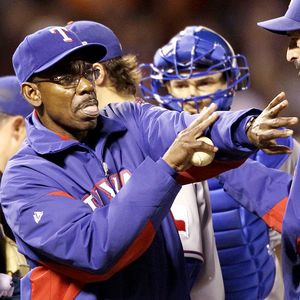
Maybe you will question some of the moves from Texas manager Ron Washington. Should he have waited to use Derek Holland in Game Seven instead of bringing him in to help close out Game Six?  Should Rangers Closer, Neftali Perez been left in to face the bottom of the Cardinals order in the 10th inning of Game 6 instead of bringing in lefthander Darren Oliver?  Should Albert Puljos been intentionally walked in favor of pitching to Lance Berkman in the 10th inning of Game 6?  And what if Nelson Cruz got a better read on the ball hit by Cardinals' David Freese in the 9th inning – (we probably wouldn’t be having this conversation!)  


In the end, nothing will change what has occurred…when you wake up, you’ll still be out of a job…your Plus One will no longer be at your side…and the your team will still be in search of its first World Series Championship – but time heals all pain, and there is always next time.  For the Rangers and their fans, next time can’t come soon enough.

Thursday, October 27, 2011

A Failure To Communicate - Game 5 of The 2011 World Series


Communication…funny thing about it is, you never know how important it is until you don’t have it.   Arguably, two of the greatest inventions that have propelled mankind through the years have been the telephone and the internet.  Both technological breakthroughs that have changed the way we live.  At the core of our existence is the ability to communicate a message, a directive, an emotion to someone.  How many times have you heard a relationship end, and the reason… “We Just Don’t Seem To Communicate Anymore!” In every Business Strategy brief there is a section on the importance for CLEAR and CONCISE COMMUNICATION.  Think about how many times you have said to a co-worker, “I wish there was better communication between the departments,” or “if only my boss had told me exactly what they wanted, it would have saved a lot of time and energy.”    

The 2011 World Series between the St. Louis Cardinals and the Texas Rangers has seen its share of strong pitching – see Rangers’ starting pitcher Derek Holland in Game 4…Record Tying Hitting - see Cardinals first baseman Albert Puljos in Game 3…and clutch performances – see Rangers’ catcher Mike Napoli in Game 4 and Game 5.  Yet, the 2011 Fall Classic might be remembered best for Game 5 and the breakdown in communication between a manager and his bullpen.  By now, we have all heard the story about the Cardinals bullpen’s inability to hear the instructions from manager Tony LaRussa (twice LaRussa called the bullpen and instructed them to get closer Jason Motte ready to come in) resulting in the manager’s decision to stick with relief pitcher, lefthander Marc Rzepczynski to face the hot hitting (and Series MVP candidate) Ranger Mike Napoli with the winning runs on in the 8th inning.  Napoli, a righty hitter, took Rzepczynski deep to right field and drove in two runs.  Texas won 4 to 2 and are one game away from winning the franchises first World Series title.  (For the record, lefty hitters batted .165 against Rzepczynski in 2011 regular season.  Righty hitters batted .275).  Would you want Rzepczynski facing the hottest hitting righty in the Rangers lineup with the game and possibly the series on the line?

Could the noise from the Texas Ranger’s fans be so loud that the bullpen coach Derek Lilliquist  didn’t hear LaRussa say “get Jason Motte ready” and instead, heard “get Lance Lynn ready."   Could the bullpen coach be so focused that he is not watching the game situation unfold before him, and understand the match up between left hander Rzepczynski and right hand hitter Napoli.  Wouldn’t one think that LaRussa, pitching coach Dave Duncan, and bullpen coach Lilliquist  go over who would they want pitching in certain game situations during their pregame meeting?  (According to LaRussa, it had been determined prior to Game 5 that relief pitcher Lance Lynn would not be pitching in the game due to his workload in Game 4.) 


It’s been stated that some of the pitchers in the Cardinals bullpen were aware of the situation that was unfolding, yet didn’t feel it was their place to say anything.  LaRussa does the thinking, and the players do the playing.  Sometimes not being able to communicate is just as bad as the wrong communication.

Whatever the reason…the noise from a home team crowd that is starving for a World Series championship, a bullpen coach who can’t understand the difference between the names Motte and Lynn, a misunderstanding between a manager and his relievers or a mental lapse from a manager who is known for his focus and discipline…Game 5 and the 2011 World Series may be the first Fall Classic that was decided not because of one team’s sub par pitching or lack of hitting, but because of poor communication.  And if you're a Cardinals fan, that's got to be tough to hear. 


Wednesday, October 19, 2011

Cardinals Stay The Course...Right To The World Series


"Discipline Is The Bridge Between Goals and Accomplishment..."


There is a lot to be said about Discipline and Focus.  In Life, in business, in sports, discipline and focus can be the driving force behind your success.   Think about how many times you decided to quit smoking, lose weight, get in shape, find another job, make your sales quota…what “things” kept you on course to reach your goal?  Yes, you had determination to “get it done…”  Maybe it was your competitive spirit that pushed you to achieve what naysayer’s said you couldn’t…At the foundation of your plan was Discipline and Focus.  Towards the end of the Major League Baseball season, one team embodied these two words more than any other, and that team is still playing baseball well into October.  And that team is led by a manager who throughout his career, has been committed to Discipline and Focus.  The team is the St. Louis Cardinals, and their manager is Tony LaRussa. 

A month and a half ago, LaRussa and the Cardinals were a team fighting for their proverbial playoff lives.  At the beginning of September, the Cardinals were eight games above .500, and eight and half games behind the Atlanta Braves for the lone National League Wild Card spot.  The picture looked bleak.  Even at the beginning of the season, the St. Louis Cardinals looked anything like a World Series contender as LaRussa’s #2 Starting Pitcher, Adam Wainwright, a 19 game winner in 2010 went down with a season ending injury.  The Cardinals manager stayed the course and pieced together a rotation behind ace Chris Carpenter that consisted of Kyle Lohse, Jake Westbrook, and Jaime Garcia.  That trio of Lohse, Westbrook, and Garcia had a combined 2010 record of 27 – 27.   The bullpen was in no better condition with Ryan Franklin, the former All-Star reliever for the Cardinals losing his closer’s duties in mid-April and eventually released.  LaRussa, and pitching coach, Dave Duncan, turned to Fernando Salas, and Jason Motte to close out games.  Salas had one year in The Show under his belt, and Motte was a converted catcher.
 
Sure, the Cardinals would boast the National League’s best offense, leading the league in Team Batting Average (.273), Runs Batted In (726), On Base Percentage (.341) and tied for league lead with the Milwaukee Brewers in Slugging Percentage, (.425)  Yes, the Cardinals have Albert Puljos, arguably Major League’s Best Hitter, but in 2011, his season, while for some would be considered outstanding, for Pujols, was subpar finishing with 37 Home Runs, 99 rbi’s and .299 Batting Average.   In the off season, the team’s biggest name free agent signing was Lance Berkman, who finished the 2010 season with the New York Yankees after being dealt from the Houston Astros.  Now, don’t get me wrong, Berkman is a good player, and in his prime, he put up some impressive stats – a six time National League All Star, at his best Berkman was hitting 25+ Home Runs while driving in over 100 rbi’s and batting over .300.   But that was four years ago.  In 2010, the 34 year old Berkman hit .245 with 58 rbi’s.  I don’t think you necessarily categorize the signing of Berkman as major off season acquisition.  (BTW, Berkman did finish 2011 with a .301 average, 31 home runs, and 94 rbi’s, and the NL Comeback Player of Year!)

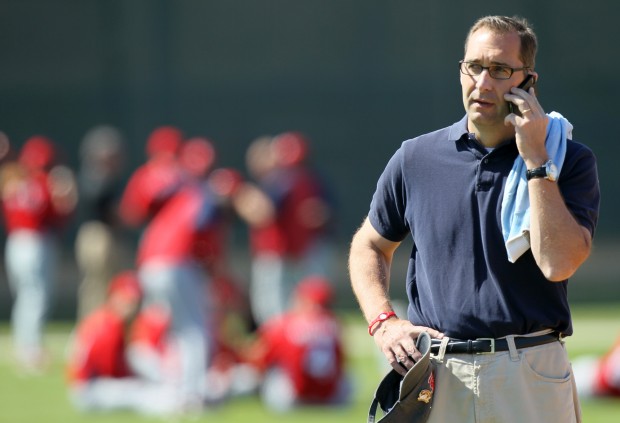
On July 27, the Cardinals stood in second place in the NL Central, a half a game behind the Milwaukee Brewers.  General Manager John Mozeliak and LaRussa knew they would have to focus on their pitching if they had any chance to get into the playoffs, and right at the trade deadline, GM Mozeliak addressed the Cardinals needs by dealing for starter, Edwin Jackson, and relievers, Marc Rzepcznski and Octavio Dotel.  St. Louis did part with Colby Rasmus, an outfielder who many felt would be a part of the Cardinals future, but they addressed several needs with the deal that many considered the key to the Cardinals playoff run.  (The Cards also traded for shortstop Rafael Furcal, and in August picked up left-hander reliever, Arthur Rhodes) 

Fast forward to October 16, at Miller Park, it’s the 9th inning of Game Six of the NLCS, there are two outs, and the Cardinals are beating the Brewers 12 – 6.  Jason Motte is on the mound about to throw a 99 mph fastball past Brewers batter, Mark Kotsay, to end the game, and put the Cardinals back in the World Series for the first time since 2006.  By now everyone around Major League Baseball is asking themselves how did this St. Louis team do it?  Weren’t the Philadelphia Phillies supposed to be closing out the National League Championship Series and heading to the World Series?  Didn’t the Atlanta Braves have a lock on the Wild Card spot?  How can a team whose starting rotation was led by a pitcher with 14 wins during the regular season make it into the World Series? 

As Cardinals’ catcher Yader Molina squeezed the third strike on Mark Kotsay, and ran out to the mound to bear hug Jason Motte, joining his other teammates on the field to celebrate, manager Tony LaRussa turned towards pitching coach Dave Duncan in the Cardinals dugout, firmly shook his hand, and gave him a hug of his own.  Together they had been here before, and knew their quest for a Championship wasn’t over.  There was still one more series to play, and more decisions to make…now was not the time to forget what lie ahead…now was not the time to forget what got them there in the first place.  

Monday, October 10, 2011

More Than Just A Game...MONEYBALL


"The True Measure of Leadership Is Influence - Nothing More, Nothing Less” 
John C. Maxwell

How many of us have wanted to show our superiors, our coworkers, our competitors that not only do we know what we’re doing, but we can do it better than anyone else, and the way we do it will change how the industry conducts business in the future.  It’s not just about being innovative, it’s about questioning what you see around you, and asking yourself… “Is that all there is?”   It’s about proving to the establishment that the status quo isn’t necessarily the best way to get it done.  That sometimes, you’ve got to not only think differently but act differently and most importantly, have the conviction, the vision, the determination to see it through.  And finally, provide the leadership to confront those that don’t believe in your plan, that don’t want to follow your lead and wish to stay in the world that seems safe to them, and strongly encourage them to either get on the bus or find another mode of transportation.

MONEYBALL, the movie based on the New York Times bestseller authored by Michael Lewis, is more about leadership, conviction, and challenging the status quo, than about baseball, sabermetrics and the Oakland A’s.  Don’t get me wrong, I am not downplaying what Oakland A’s General Manager, Billy Beane, the focus of MONEYBALL, did with his team during the rise of The Sabermetrics Era beginning in 2002.  Losing players with superstar status, as Beane and A’s did after the 2001 season when centerfielder Johnny Damon, first baseman Jason Giambi, and closer Jason Isringhauser, left the team for greener pastures and greener bank accounts would leave any General Manager scratching their head.  And while Beane may have pleaded with the Oakland A’s owner to increase one of the lowest payrolls in the Major Leagues in order to compete in the free agent market, the General Manager also took these departures as an opportunity.  An opportunity to think differently, act accordingly, and most of all, challenge those who thought his way of thinking was sure to fail. 
 
Beane confronted those who stood in his way…the passionate discussion with the old time scouts who were more infatuated with how a player looked at the plate than his statistics.  
Beane challenged those who said it wouldn’t work…the back office meetings with Oakland A’s manager, Art Howe, who didn’t buy into Beane’s vision and constantly stood in the way. 
Beane lead those who believed in him…he followed up on his vision and took it upon himself to speak to A’s players about what he was trying to accomplish. 

For Billy Beane, winning wasn’t everything, if it was, he would have taken the $12.5 million contract offered by the Boston Red Sox, and their owners willingness to open the purse strings to sign the best talent available.  Yes, Beane wanted to win a World Series, he wanted his team, the Oakland A’s, to be the winners of the last game of the Major League Baseball season....he also wanted to change the game and how it was played…Isn’t that something we all dream of...?


Saturday, August 27, 2011

Stop The Ride...I Want To Get Off! AJ Burnett and The Yankees Rotation


If this was a boxing fight, the corner would have thrown in the towel.


New York Yankees pitcher, AJ Burnett was “bloodied” once again, this time by the last place Baltimore Orioles on Friday night. At the end of the 5th inning, Burnett’s 116 pitches yielded nine runs, nine hits, two home runs, two walks, three wild pitches, and a crowd full of boos!  (By the way, the Yankees were on the road playing at Camden Yards in Baltimore.)  In the second inning, when Burnett was at his “best,” the Yankee starter gave up six runs as the Orioles had six extra base hits in a row.  And Yankees manager Joe Girard left this guy in for another three innings!!!  What was Girardi thinking?  In his last start, on August 20 versus the Minnesota Twins, Burnett allowed seven runs in one and two thirds innings, and was sent to the showers. (not before he had a few choice words for manager Girardi. Or did he…) How much longer can the Yankees watch this horror show unfold and still have confidence in Burnett? 

During the month of August, Burnett’s era is 11.91.  The guy is averaging almost 12 runs a game, and you still send him out there every 5th Day!!!  In his last ten starts, dating back to July 4th, Burnett is 1 and 5 with a 7.79 era.  That includes the game against the Chicago White Sox on August 7th, where Burnett imploded in the 4thinning and gave up five runs. He was pulled before the end of the fifth inning with the Yankees leading 13 to 7.  The Yankees went on to win the game 18 to 7, but Burnett didn’t get the decision.  Can you imagine what the Yankees clubhouse must be like every time Burnett’s name is listed as the day’s starting pitcher?   

Many of us realize that the Yankees are into Burnett for a lot of money- he is in the third year of a five year, $82.5 million contract.  But at some point you’ve got to admit to yourself it’s just not working out.  Putting this guy out there on the mound is not good business.  I can understand the thought that Burnett will work himself out of the slump.  We’ve all been there. But how long do you wait before you take action?  I can understand the desire for management to want to back “their guy.” Afterall, they’re the one’s who decided to bring him to New York.  But you can be penny wise and dollar foolish.  What are you hoping to prove?      

If you’re a Yankees fan, you have witnessed this type of behavior before.  Over the year, the New York Yankees have collected a star studded rotation of pitchers who seem to fade under the bright lights of New York.  Ed Whitson, Carl Pavano, Javier Vazquez, Andy Hawkins, Kenny Rogers – all are perfect examples of what happens when you throw money away. The Yankees are in the middle of a pennant race, trailing the Red Sox by one game, and the general conclusion is that the Yanks will make the playoffs in some capacity.  (But we’ve seen collapses before…)  Making the playoffs is great for some teams, if you’re wearing the pinstripes it’s just not good enough – not for the players, not for ownership, and certainly, not for the fans.  

I always thought in business, leadership had to demonstrate patience with one eye on potential, and the other on results.  In today’s business world, I am sure we have first hand experience with leaders who were too quick to pull the trigger… “you have three months to prove yourself…or else,” and the “what have you done for me lately” mentality.  The pressure is on to perform and the threat of someone breathing down your back is always there.  I get it.  It's business.  We live in a world where results are expected, and if we don't get it done, they will find someone else who will.  But somehow, that doesn’t apply to sports.  Somehow, a guy who gets paid millions of dollars to perform to an expected standard gets a “hall pass.”  I don’t get it…and I guess I never will.